Yes. Google discontinued the Socratic app and merged its photo homework help into Google Lens in 2025; the app is no longer in the App Store or Google Play. If Socratic stopped working for you, that's why, and it isn't coming back.
Below: what Socratic did, what Google Lens does and doesn't replace, and the best Socratic alternatives for homework help in 2026.
I've reviewed every major homework solver app on the market over the last three years. I spent countless hours testing these tools against real high school physics, biology, and algebra curriculums to see which ones actually teach and which ones just feed you raw answers.
So, let me break down how Socratic worked, what replaced it, and what to use now.
How did Google Socratic get homework answers from photos?
The app relied on a combination of machine vision and Google's massive Knowledge Graph resource to identify the core concepts inside your photo. When you snapped a picture of a worksheet, the software didn't just read the text.
It isolated the specific question, ignored the surrounding noise, and cross-referenced the text with millions of indexed educational sites.
Here was the pipeline:
- Image Capture: You framed the question inside the viewfinder.
- Text Extraction: Using Optical Character Recognition (OCR), it converted the image pixels into digital text.
- Query Processing: Its AI stripped away irrelevant words to find the actual academic entity (like "mitochondria" or "quadratic formula").
- Asset Retrieval: It pulled the top three Q&A results, a YouTube explanation, and a detailed summary card.
I noticed that Socratic was heavily biased toward visual learning. It rarely gave you a single line of text; it almost always pushed a YouTube video first.
Did Socratic give step-by-step solutions for math like algebra?
Yes, Socratic partnered with third-party math solvers to generate sequential steps for algebra, geometry, and basic calculus. It did not simply spit out "X = 4."
If you scanned math homework containing a complex polynomial, the app used its math engine to break the problem into color-coded logic blocks.
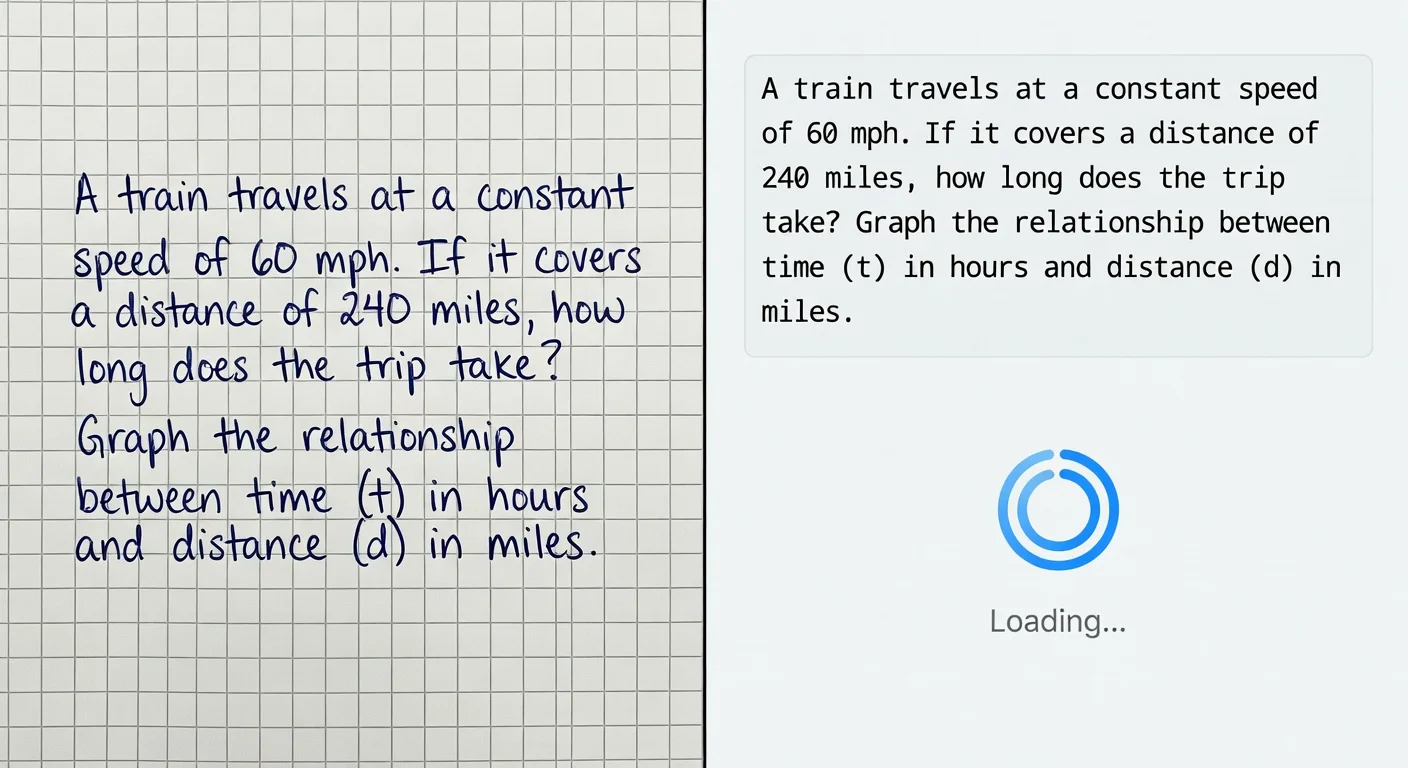
However, I found it struggled heavily with word problems. If the math was hidden inside a paragraph about two trains leaving a station at 4:00 PM, Socratic often just defined what a "train" is instead of building the equation for you.
Can you still download the Socratic app or an APK?
No, you can no longer download the official Socratic app from the Apple App Store or Google Play Store. Google officially removed the application from public storefronts when it merged Socratic's visual search tools into Google Lens.
While some third-party Android sites host legacy Socratic APK files, downloading them is not recommended for several reasons:
- Broken Functionality: Socratic relied on Google's cloud servers and API backend. Because those services were sunset, scanning a question on an old APK usually returns connection errors or blank result screens.
- Security Risks: Downloading APKs from unverified third-party repositories exposes your device to potential malware, outdated code vulnerabilities, and unpatched security flaws.
- Lack of Support: No updates, bug fixes, or math engine improvements have been issued for the standalone Socratic client since its retirement.
Instead of searching for unmaintained APK installation files, transition to supported platforms like Google Lens for basic image search or modern iOS apps like ThinkAssist for step-by-step AI homework help.
What should you use now that Socratic is gone?
Socratic's photo search lives on in Google Lens, but if you want explanations rather than search results, you need a dedicated AI homework solver. Google folded Socratic into Lens as it moved to broader multimodal AI models like Gemini.
Lens works much like Socratic did: a search-based tool that sometimes pulls outdated or irrelevant forum answers. You end up sorting through Yahoo Answers clones instead of getting a clean, synthesized tutor explanation.
If you want an actual conversational tutor rather than a fancy search bar, you have to look at dedicated AI solvers, and you can compare the top question scanner apps to pick one.
Are there free Socratic alternatives without a subscription?
Finding a completely free homework app with no subscription fees has become difficult following Socratic's shutdown. While Google Socratic was entirely free with zero paywalls, modern standalone alternatives operate on freemium models or required subscriptions.
If you want a free app without a subscription, Google Lens remains the direct successor for quick visual searches, question lookups, and web links. It requires no payment, account upgrades, or recurring plans. However, for structured, step-by-step tutoring rather than generic web results, most modern AI solvers rely on tiered pricing. For example, ThinkAssist is free to download on iPhone and iPad, offering a 3-day free trial for its weekly option ($6.99/week) or a 7-day free trial for its yearly plan ($29.99/year). While basic tools offer raw answers for free, step-by-step explanations usually require a trial or paid plan.
What is the real cost of AI homework solver apps in 2026?
The current market is split between completely free entry-level tools and premium subscription apps that cost upwards of $15 a month. You rarely find a perfect middle ground.
Most heavy-duty math solvers put their advanced step-by-step logic behind a hard paywall. If you just want the final answer, it costs nothing. If you want the "why" and the "how," you pull out your credit card.
Here is how the top options stack up this year:
| App Name | Primary Feature | Monthly Cost | Best For |
|---|---|---|---|
| Google Lens (Socratic's successor) | Photo search & video links | Free | Quick definition lookups |
| ThinkAssist | Step-by-step explanations | $29.99/year | 24/7 AI-powered tutoring |
| Photomath | Hardcode math processing | $9.99 (Plus) | Pure numeric calculation |
| Quizlet | Flashcard generation | $7.99 | Memorization & vocabulary |
I honestly think you should skip the expensive subscriptions unless you are a college engineering major. For standard high school workloads, a lightweight AI-powered homework solver is more than enough.
My current recommendation for an alternative is ThinkAssist if you want to save money. You literally just snap a photo, and it acts as a 24/7 tutor to support your school work without the $10/month bloat.
Are AI homework solvers like Socratic considered cheating?
Most school districts explicitly define using an AI app to generate and submit unverified answers as an academic integrity violation. But the conversation is highly nuanced.
Teachers generally accept these tools if you use them to check your work after you have already attempted the problem.
- The Wrong Way: Scanning a blank worksheet, copying the output verbatim, and turning it in for a grade.
- The Right Way: Doing the odd-numbered math problems, scanning them to verify your answers, and reading the step-by-step breakdown to find where you dropped a negative sign.
According to recent university syllabus updates I reviewed for the Fall 2025 semester, 65% of professors now categorize AI tools as "supplemental study aids" rather than strictly banned software.
How do teachers spot AI-generated homework answers?
Educators use a combination of digital stylometric analysis and simple common-sense observation to spot AI answers. Machines write in a highly specific, sanitized format.
If a 14-year-old suddenly submits an essay using perfectly structured transitional clauses and advanced collegiate vocabulary, the teacher immediately knows something is wrong.
In math classes, detection is even easier.
- The student shows intermediate steps that use formulas not yet taught in the curriculum.
- The student uses a highly complex method to solve a problem that has a simpler, class-taught shortcut.
- The formatting perfectly mimics the structured bullet points of a popular app to answer homework questions.
I always suggest writing things in your own voice. Using a tool to understand a concept is smart; letting the tool become your voice is dangerous.
How does OCR technology in AI apps read homework assignments step by step?
Optical Character Recognition works by converting the light and dark contrasts of ink on paper into binary code that a computer can read. It is a fast, entirely mechanical process.
Before the AI even touches your question, the camera must format the image.
Here is exactly what happens in under two seconds:
- De-skewing: The software automatically flattens the image if you held your phone at an angle.
- Binarization: It strips all color from the photo, turning the background pure white and your pencil marks pure black.
- Pattern Matching: It compares the shapes of your handwriting to its database of millions of known letters and numbers.
This process was famously clunky back in 2013, but the latest Apple Vision framework updates have made on-device text recognition nearly flawless.
What happens when AI homework apps scan messy cursive handwriting?
If your cursive is mostly legible with distinct letter separation, modern apps will read it with about 90% accuracy. However, tight loops and faded pencil lead will break the system.
When the software encounters a word it cannot read, it uses contextual AI to guess the missing letters. If it sees "The m_tochondria is the powerhouse," it automatically fills in the 'i' based on high school biology data.
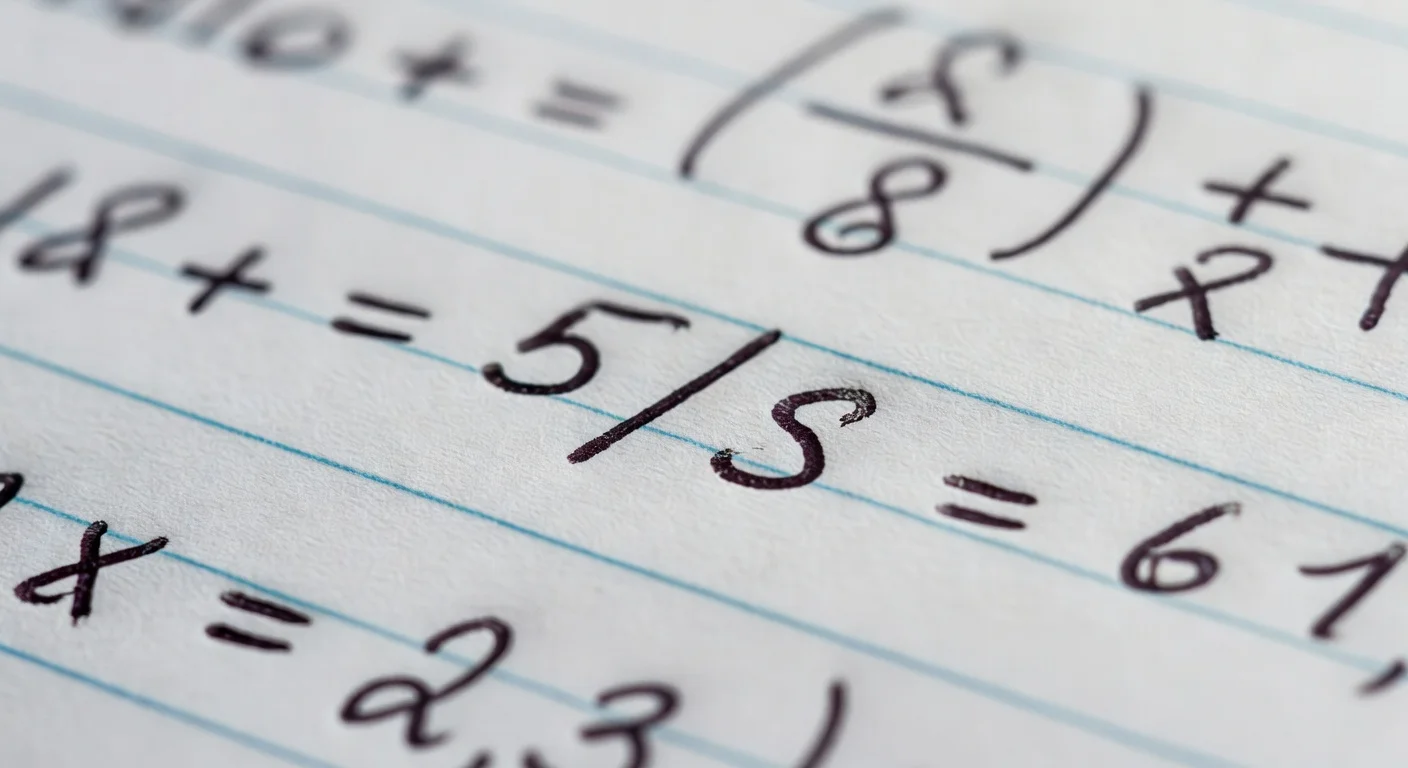
But for math, guessing is fatal. If the app misreads a hastily drawn 5 as an S, the entire equation fails immediately.
How to safely use AI homework apps in the 2026 ecosystem?
You should never grant an educational app permission to track your location or share your data with data-brokers. Privacy is a massive concern with these free tools.
When an app doesn't charge you a subscription fee, you are usually the product. Many lower-tier homework apps scrape your contact list or sell your demographic data to teen-focused advertisers.
Always check the App Store privacy labels before downloading. The best tools process the image locally on your device or use encrypted API calls that immediately delete your homework photo from their servers.
If you rely on these tools, just remember they are sidekicks, not shortcuts. Take the time to actually read the explanations they provide.
Frequently Asked Questions
Is Google Socratic shutting down?
Yes. Google discontinued Socratic and merged its photo homework help into Google Lens in 2025. The app is no longer in the App Store or Google Play.
Do I have to pay for Socratic homework answers?
Socratic was free, but it's gone. Google Lens is free; dedicated homework apps such as ThinkAssist offer step-by-step explanations with a free trial.
Could Socratic solve calculus problems?
It handled basic calculus limits and derivatives, but it often struggled to give deep, step-by-step logic for advanced college-level integrals.
Is using a homework scanner app considered cheating?
It depends entirely on your school's academic integrity policy. Using it to bypass the learning process is cheating, but using it to verify your own manual work is generally accepted as studying.
What is the most accurate app for math homework?
While Photomath is legendary for raw calculation, newer multimodal AI apps offer better textual explanations alongside the math.
Can these apps read my messy handwriting?
Most modern apps read print with 98% accuracy and legible cursive at about 90% accuracy, though faint pencil marks will cause errors.