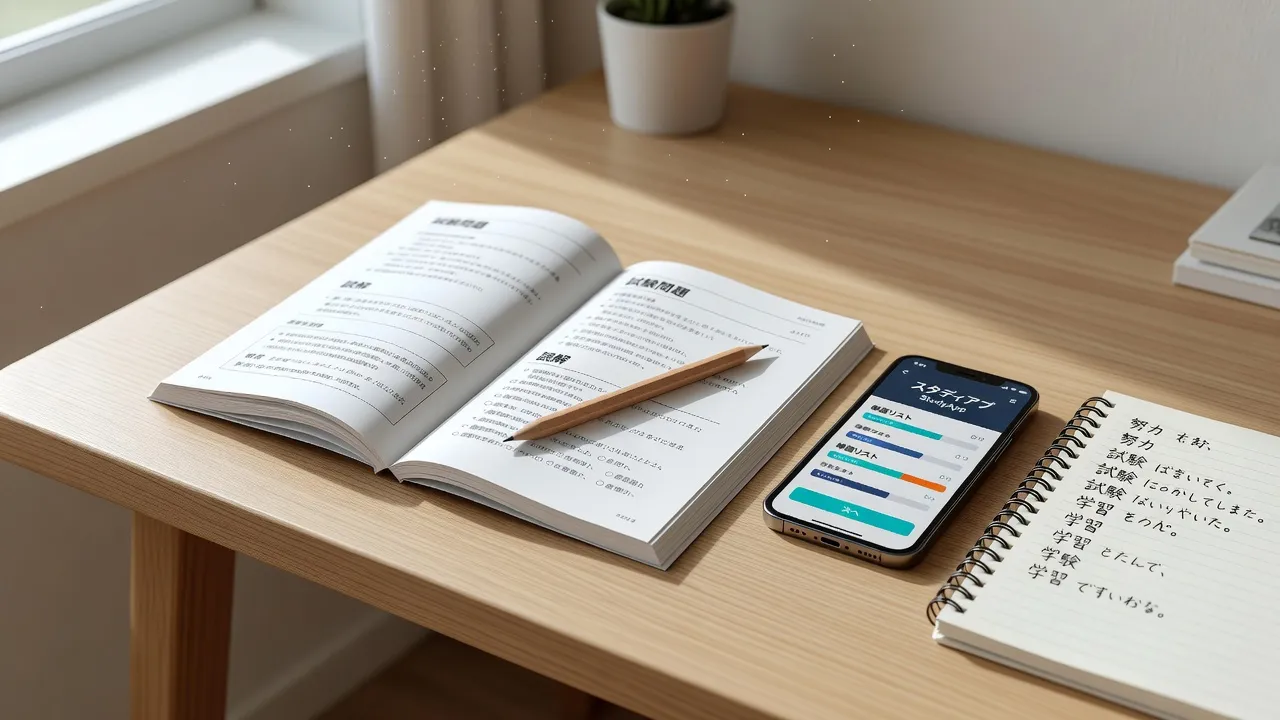
The best free JLPT N5 practice test resources are the official practice workbooks published on JLPT.jp, supplemented by interactive drill sites like Japanesetest4you and AI study apps like ThinkAssist. Taking simulated practice exams is essential because the official N5 test requires answering roughly 70 total questions under strict time limits: 25 minutes for Vocabulary, 50 minutes for Grammar and Reading, and 30 minutes for Listening. Practicing with full-length timed tests ensures you manage your time effectively across all three test sections.
What most language learners get wrong about the Japanese-Language Proficiency Test (JLPT) N5 level is treating mock exams as passive self-assessment tools rather than diagnostic blueprints. Candidates frequently score high on un-timed vocabulary quizzes, only to fail the official exam because they mismanaged their time during the combined Grammar and Reading section. As of September 2026, test registration fees and strict biannual testing schedules mean failing a test costs both money and six months of wasted preparation.
Using high-yield practice tools allows you to spot specific weak points in grammar, particle usage, and audio comprehension well before test day. Below is a detailed breakdown comparing the top JLPT N5 practice test options available today.
Top JLPT N5 Practice Test Platforms Compared
The table below outlines the leading JLPT N5 mock tests and practice question banks based on question format, core functionality, target audience, and key trade-offs.
| Resource Name | Primary Focus | Best Suited For | Key Trade-off |
|---|---|---|---|
| Official JLPT.jp Workbooks | Official full-length mock exams | Test takers seeking exact exam replica formatting | No detailed answer explanations provided |
| ThinkAssist | AI-powered question solver and exam preparation | Students needing instant step-by-step explanations for wrong answers | Requires taking photos or entering text prompts |
| Japanesetest4you | Targeted quick-fire quiz drills | Rapid vocabulary and particle practice | Older website interface with ads |
| JLPT Sensei | Grammar-focused practice quizzes | Reviewing specific N5 grammar patterns | Questions are split into small quizzes rather than full tests |
| NHK WORLD Easy Japanese | Audio listening and contextual reading | Beginners building listening comprehension | Does not follow multiple-choice test formats |
| Pass-Harbor | Interactive timed practice tests | Simulating real test timing on a browser | Limited bank of unique questions |

What official JLPT N5 sample questions does JLPT.jp offer?
The official JLPT.jp site offers two complete sample workbooks containing actual past exam items for the N5 test level. These official booklets, published jointly by the Japan Educational Exchanges and Services and The Japan Foundation, match the identical layout, font, page structure, and audio timing used on actual test papers worldwide.
Downloading the official sample workbooks gives you direct access to the standard test sections:
- Language Knowledge (Vocabulary): 25-minute section testing kanji reading, orthography, and word context.
- Language Knowledge (Grammar) & Reading: 50-minute combined section testing particle selection, sentence composition, and short passage comprehension.
- Listening: 30-minute section featuring task-oriented listening, point comprehension, and quick response questions with authentic audio tracks.
The primary limitation of the official JLPT.jp practice materials is that they only supply an answer key without any step-by-step explanations. If you select the wrong particle in a grammar question, the answer key tells you which option was correct, but it will not explain why your selection was wrong.
How does ThinkAssist simplify JLPT N5 exam preparation?
ThinkAssist simplifies N5 test prep by delivering instant, step-by-step explanations whenever you hit a tricky grammar point or kanji reading. Rather than searching through thick textbooks when you miss a question on a practice exam, you can simply snap a photo of any Japanese sentence or test problem to break down its underlying mechanics.
- JLPT N5 Practice Question
- Snap Photo with ThinkAssist App
- Automatic Subject & Grammar Detection
- Step-by-Step Explanation & Saved Test Notes
Using an AI-powered homework solver allows you to convert static practice tests into active learning sessions. Key benefits for Japanese language learners include:
- Snap a Photo: Instantly capture printed practice test pages, complex kanji passages, or handwritten notes.
- Step-by-Step Solutions: Receive clear breakdowns of verb conjugations (such as ~te form or ~masu stem), particle rules, and sentence structures.
- Easy Exam Prep: Save past answers and explanations automatically in the app so you can review your specific mistake patterns right before test day.
Whether you are balancing test prep alongside high school or college coursework, developing solid adhd study skills like quick feedback loops helps prevent study fatigue and keeps your momentum high.
How good is japanesetest4you's JLPT N5 practice test?
Japanesetest4you is one of the most comprehensive free drill repositories for JLPT N5 practice questions, offering hundreds of online quizzes. The platform organizes test items directly by N5 categories, including kanji readings, vocabulary usage, grammar particles, and short listening clips with audio files.
The strengths of Japanesetest4you lie in its sheer question volume:
- Granular Category Drills: You can practice 10-question mini-quizzes focusing specifically on problematic particles like ni, de, or wo.
- Immediate Feedback: Quizzes provide immediate correct answer reveals after every question.
- Listening Practice: Includes standalone audio snippets designed to mimic the short-response questions on the real test.
However, the site presents questions as isolated items rather than full-length, timed exam simulations. Relying exclusively on quick online quizzes can give you a false sense of security regarding your time management during the actual 50-minute combined reading and grammar section.
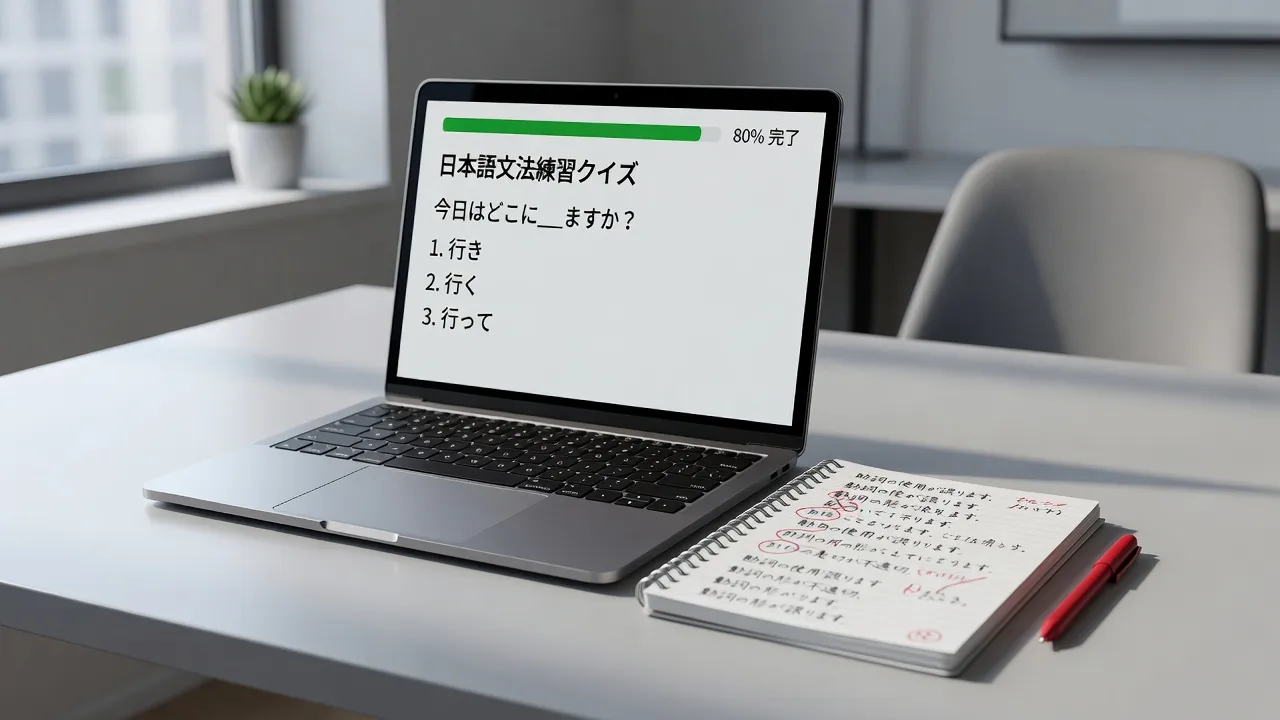
How good is JLPT Sensei's N5 practice test?
JLPT Sensei provides clean, highly structured N5 practice quizzes alongside downloadable PDF study sheets and vocabulary master lists. It is widely regarded by self-study students as one of the clearest online resources for organizing N5 grammar structures and kanji lists.
JLPT Sensei excels at providing structured preparation materials:
- Clear Formatting: Grammar entries include formation rules, english translations, and example sentences.
- Downloadable Material: Printable flashcards and cheat sheets allow offline study.
- Targeted Quizzes: Quizzes focus directly on confirming your understanding of specific N5 study lists.
The trade-off is that JLPT Sensei functions primarily as a learning guide rather than a full exam simulator. To get a realistic feel for test endurance, you must combine JLPT Sensei's grammar sheets with timed practice exams from other sources.
What N5 practice does NHK WORLD Easy Japanese offer?
NHK WORLD Easy Japanese provides practical audio lessons, dialogue transcripts, and comprehension quizzes tailored directly to the beginner N5 level. Produced by Japan's national public broadcaster, as detailed on NHK WORLD-JAPAN's Easy Japanese portal, the lessons cover everyday scenarios using fundamental N5 vocabulary and grammar patterns.
Key learning features of NHK WORLD include:
- Native Audio Speed Options: Listen to natural conversational Japanese spoken at both normal and reduced speeds.
- Contextual Grammar Notes: Practice grammar within authentic conversations rather than isolated textbook sentences.
- Free Audio Downloads: Download audio skits and transcripts for offline listening practice while commuting.
While NHK WORLD is an exceptional tool for building natural listening comprehension, it does not prepare you for the specific multiple-choice question formats used on the official JLPT exam paper.
How good is Tofugu's JLPT N5 practice test?
Tofugu does not offer a traditional full-length practice test, but its N5 resource guides, hiragana/katakana tools, and grammar master lists are among the highest-quality prep guides online. Tofugu focuses heavily on mnemonics and deep structural understanding of the Japanese language.
Tofugu's approach offers several clear advantages:
- Mnemonic Learning: Uses memorable visual associations to teach the 100 required N5 kanji efficiently.
- Detailed Articles: Explains subtle nuances between similar Japanese grammar points that trip up beginners.
- Resource Recommendations: Curates vetted lists of Japanese dictionaries, audio apps, and reading materials.
The trade-off is clear: if you need to take a full timed 105-minute mock exam today, Tofugu's portal will direct you to external PDF workbooks rather than hosting an interactive test directly on their site.
How good is Pass-Harbor's JLPT N5 practice test?
Pass-Harbor offers a modern web-based JLPT practice interface that accurately simulates the official exam timer and question presentation. The site provides interactive tests for N5 through N1, making it popular among students who want to simulate computer-based test taking.
Features of Pass-Harbor include:
- Built-in Timers: Forces you to complete sections within the official time limits (e.g., 25 minutes for vocabulary).
- Automated Scoring: Generates an immediate score report broken down by test section upon completion.
- Clean UI: Eliminates banner advertisements and distracting sidebars during test practice.
The primary trade-off is question variety. After taking their N5 practice modules two or three times, you will begin encountering repeated questions, reducing the diagnostic value of subsequent attempts.

What most students get wrong about N5 mock exams (and what it costs them)
The single biggest error students make with N5 practice tests is failing to enforce official time constraints during their practice runs. Spending 45 minutes on the vocabulary section at home gives a false sense of security, but on test day, that section is capped at exactly 25 minutes.
Here are the four costly mistakes candidates make when taking N5 mock tests:
1. Ignoring Section-Specific Time Limits
The JLPT N5 is split into three separate timed blocks. If you finish the Vocabulary section early, you are not allowed to open the Grammar/Reading section. Practicing all sections as one continuous, un-timed study block ruins your ability to pace yourself during the real exam.
2. Relying on Romaji During Practice
Official JLPT test papers contain zero romaji (latin alphabet characters). Every question is written entirely in kanji, hiragana, and katakana. Students who rely on romaji flashcards during study often freeze when forced to read full Japanese sentences under test pressure.
3. Misunderstanding the Listening Audio Pace
On the official JLPT listening exam, audio passages are played exactly once. There are no replays or pauses. Students who practice with pause-and-rewind audio controls during mock tests frequently panic during the actual exam when the audio moves on to the next question.
4. Studying Answers Without Understanding the Grammar Mechanics
Memorizing that question #14 was option "B" does not help you when the real exam tests the same grammar structure with different vocabulary. Using intelligent tools like ThinkAssist to get instant step-by-step breakdowns ensures you understand the actual rule behind every incorrect answer. Integrating proper pacing habits alongside good study break ideas helps keep your mind clear during intensive prep weeks.
How to structure your JLPT N5 study schedule before test day
A successful JLPT N5 study schedule requires dividing your preparation into three distinct phases spread across 8 to 12 weeks. Setting structured benchmarks prevents cramming and gives you adequate time to complete at least two full-length practice exams.
- Weeks 1-4: Knowledge Building
- Weeks 5-8: Sectional Drills
- Weeks 9-12: Timed Mock Exams
Follow this battle-tested 12-week schedule to ensure complete exam readiness:
Phase 1: Foundation Building (Weeks 1–4)
- Kanji Target: Master 10 kanji characters per week (reaching the ~100 kanji requirement).
- Vocabulary Target: Learn 50 to 70 new words weekly using spaced-repetition flashcards.
- Grammar Focus: Master essential particle usage (wa, ga, ni, de, wo, to) and basic verb conjugations.
Phase 2: Sectional Practice & Weak Spot Diagnostic (Weeks 5–8)
- Targeted Drills: Take untimed 10-question quizzes on Japanesetest4you and JLPT Sensei.
- Error Analysis: Scan every question you miss into ThinkAssist to review step-by-step breakdowns and store key grammar rules in your saved test notes.
- Listening Habit: Listen to 15 minutes of NHK WORLD Easy Japanese audio podcasts daily without reading transcripts on your first pass.
Phase 3: Full Simulation & Refinement (Weeks 9–12)
- Mock Exam 1 (Week 9): Take Official JLPT Sample Workbook 1 under strict timed conditions.
- Review Week (Week 10-11): Focus exclusively on fixing error patterns identified in your first mock exam. Refine your writing tips and sentence parsing strategies for complex reading passages.
- Mock Exam 2 (Week 12): Take Official JLPT Sample Workbook 2 one week before the actual exam to calibrate your test-day rhythm.
Check official information on the Official JLPT Website to confirm test site entry requirements, allowed lead pencils (No. 2 or HB), and photo identification rules well ahead of time.
Frequently Asked Questions
What score do you need to pass the JLPT N5 test?
You need an overall score of at least 80 out of 180 points (44.4%) to pass the JLPT N5. Additionally, you must clear individual section pass marks: at least 38 out of 120 points on Language Knowledge/Reading and at least 19 out of 60 points on the Listening section.
How many kanji are tested on the JLPT N5?
The JLPT N5 tests approximately 100 basic kanji characters along with roughly 800 essential vocabulary words. Questions test your ability to read kanji in hiragana and select appropriate kanji for written hiragana words.
Are JLPT N5 practice tests harder than the real exam?
Official sample workbooks published on JLPT.jp match the exact difficulty of the real exam. However, third-party practice tests often feel harder because they may include vocabulary slightly outside the standard N5 syllabus or lack clear formatting.
Can you pass the JLPT N5 by only studying practice questions?
No, relying solely on practice questions is inefficient because mock tests measure knowledge rather than teach basic language mechanics. You should combine core textbook study with practice tests to diagnose and fix specific knowledge gaps.
How long is the JLPT N5 exam in total?
The JLPT N5 exam lasts a total of 105 minutes of actual test time, split into three separate sections: Language Knowledge Vocabulary (25 minutes), Language Knowledge Grammar & Reading (50 minutes), and Listening (30 minutes).
Is the JLPT N5 listening audio played more than once?
No, the audio tracks during the official JLPT N5 listening section are played only once. You must listen attentively and mark your answer sheet immediately as each question progresses.